Essay Due Tomorrow AI Detector: Student Guide 2026

Facing an essay due tomorrow and worried about AI detectors? Learn how detection tools work, their accuracy, and proven strategies to submit with confidence.
The panic of having an essay due tomorrow is something most college students know all too well. When you've used AI tools like ChatGPT to help draft your paper, the next worry becomes whether an essay due tomorrow ai detector will flag your work. With universities increasingly deploying sophisticated detection software, understanding how these tools function and their actual reliability has become essential knowledge for any student navigating academic writing in 2026. The intersection of tight deadlines, AI assistance, and detection technology creates a complex landscape that requires both awareness and strategy.
Understanding How AI Detection Works Under Deadline Pressure
When you're racing against a deadline, the last thing you need is uncertainty about whether your submission will trigger detection software. AI detectors analyze text through multiple layers of computational analysis, examining patterns that supposedly distinguish human writing from machine-generated content.
These tools measure perplexity (how predictable the text is) and burstiness (variation in sentence structure and length). Machine-generated text typically shows lower perplexity because AI models predict the most likely next word, creating smoother, more predictable patterns. Human writers, especially under deadline stress, produce more varied and sometimes inconsistent sentence structures.
Detection Algorithms and Their Limitations
The technology behind essay due tomorrow ai detector systems relies on training models to recognize AI-generated patterns. However, research has revealed significant flaws in these systems. Studies examining AI detector accuracy show that even leading tools like GPTZero achieve varying success rates depending on the AI model that generated the text.
Key weaknesses in current detection systems include:
- False positive rates that can reach 15-20% on human-written content
- Reduced accuracy when detecting text from newer AI models
- Vulnerability to simple paraphrasing and structural changes
- Bias against non-native English speakers whose writing patterns may seem "too structured"
Recent developments have highlighted these concerns, with Indiana University banning AI detection tools due to their unreliability and potential to unfairly penalize students. This institutional shift reflects growing awareness that detection technology hasn't kept pace with the sophistication of AI writing tools.

The Reality of Last-Minute Essay Detection
When an essay is due tomorrow and you've incorporated AI assistance, understanding what actually happens during the detection process can reduce anxiety and inform better decisions. Detection tools scan submissions immediately upon upload to learning management systems, generating probability scores rather than definitive verdicts.
What Happens During Automated Scanning
| Detection Phase | Process | Time Required | Accuracy Range |
|---|---|---|---|
| Initial Upload | Text extraction and formatting | Seconds | N/A |
| Pattern Analysis | Perplexity and burstiness scoring | 1-2 minutes | 60-85% |
| Comparison Check | Database matching and model detection | 2-3 minutes | 70-90% |
| Flag Generation | Probability score assignment | Instant | Variable |
The essay due tomorrow ai detector workflow operates automatically, but the interpretation of results still requires human judgment. Most institutions set threshold scores (typically 80% or higher) before flagging content for manual review. This means borderline cases often escape immediate attention, especially during high-volume submission periods.
Professors and teaching assistants then review flagged submissions manually, looking for additional indicators beyond automated scores. Understanding how professors spot AI essays in 2026 reveals that human reviewers consider context, writing history, and assignment-specific factors that algorithms cannot assess.
Strategic Approaches When Facing Detection
Students with essays due tomorrow face a practical dilemma: submit work that might trigger detection or spend precious hours revising. The strategic answer depends on how the AI assistance was used and the sophistication of the final product.
Revision Techniques That Reduce Detection Risk
The most effective approach involves understanding what triggers detection and addressing those specific elements. AI-generated text often exhibits characteristic patterns that human editing can disrupt.
High-impact revision strategies include:
- Vary sentence length dramatically - AI tends toward medium-length sentences, while humans mix very short (5-7 words) with complex sentences
- Inject personal examples and experiences - Generic statements flag higher than specific, contextual details
- Introduce minor grammatical variations - Perfect grammar throughout can paradoxically raise suspicion
- Restructure paragraph openings - AI often uses predictable transition patterns
- Add domain-specific terminology - Course-specific jargon and references reduce generic AI language
Research on AI humanizers and their effectiveness shows that tools designed to make AI writing appear more human-like have varying success rates. The most sophisticated approaches combine algorithmic transformation with contextual understanding.
For students specifically looking to transform AI-assisted work into submission-ready content, GenZWrite offers instant humanization that bypasses detection tools while maintaining your intended meaning and argument structure.
Time Management for Last-Minute Submissions
When an essay is due tomorrow and detection concerns arise, allocating your remaining time wisely becomes critical. Not all revisions carry equal weight in reducing detection probability.
| Time Available | Recommended Focus | Expected Risk Reduction |
|---|---|---|
| 4+ hours | Complete structural revision and personal voice injection | 70-85% |
| 2-4 hours | Paragraph-level editing with varied sentence patterns | 50-70% |
| 1-2 hours | Targeted revision of introduction, conclusion, topic sentences | 30-50% |
| Under 1 hour | Strategic use of humanization tools | 40-60% |

Detection Tool Accuracy and Student Impact
The question of whether an essay due tomorrow ai detector will correctly identify AI assistance matters tremendously for academic outcomes. Recent technological developments have complicated this landscape significantly.
Comparative Performance of Major Detection Tools
Different institutions employ different detection systems, each with distinct strengths and vulnerabilities. Google's Gemini has demonstrated superior ability at producing text that evades detection compared to ChatGPT, meaning the AI tool used significantly impacts detection probability.
Testing across multiple platforms reveals inconsistent results. A text flagged at 95% AI probability by one detector might score only 40% on another. This variability creates uncertainty for students wondering whether their essay due tomorrow will trigger alerts.
Factors affecting detection accuracy include:
- The specific AI model used (GPT-4, Claude, Gemini, etc.)
- The amount of human editing applied afterward
- The academic discipline and writing style conventions
- The length and complexity of the submission
- Whether content was generated in one session or multiple iterations
Research on adversarial perturbations in student essays demonstrates that minor, strategic modifications can significantly reduce detection rates without altering content meaning. This has led to an arms race between detection technology and evasion techniques.
False Positives and Academic Consequences
Perhaps the most concerning aspect of essay due tomorrow ai detector systems is their tendency to falsely accuse students who wrote original work. This isn't a theoretical problem but a documented pattern affecting thousands of students annually.
Understanding False Positive Rates
Studies analyzing false positive occurrences reveal troubling patterns. Non-native English speakers face disproportionate false positive rates because their writing may exhibit the structural consistency that AI also produces. Students who carefully edit their work to eliminate errors may also trigger suspicion, creating a perverse incentive against thorough proofreading.
The false accusation of honest students has real academic consequences, from grade penalties to honor code violations that appear on permanent records. Understanding your rights and the appeals process becomes essential if falsely flagged.
Documentation Strategies for Protection
When submitting an essay due tomorrow that you're concerned might trigger detection, creating an evidence trail provides protection against false accusations.
- Save drafts with timestamps showing writing progression
- Document research sources consulted during writing
- Keep browser history from your writing session
- Screenshot outline notes or planning documents
- Preserve communication with professors about the assignment
These materials won't prevent initial flagging but provide compelling evidence during appeals or academic integrity hearings. Institutions increasingly recognize that detection scores alone don't constitute proof of violation.
Advanced Detection Evasion Techniques
Beyond basic revision strategies, understanding the technical aspects of how an essay due tomorrow ai detector analyzes text enables more sophisticated approaches to ensuring submission success.
Linguistic Features That Bypass Detection
Current detection algorithms struggle with certain writing characteristics that humans naturally produce but AI rarely generates without specific prompting. Incorporating these elements strategically reduces detection probability.
Characteristics that lower detection scores:
- Dialectical variations and regional language patterns
- Intentional sentence fragments for rhetorical effect
- Unconventional but academically appropriate vocabulary choices
- Recursive sentence structures with embedded clauses
- Personal anecdotes with specific temporal and spatial details
- Intentional comma usage that deviates from strict grammatical rules
Research on argumentative essays generated by GPT models identifies linguistic markers that distinguish them from human writing. Deliberately incorporating opposite patterns creates more human-like text profiles.

Testing Your Own Work Before Submission
When an essay is due tomorrow, testing it through detection tools before official submission provides valuable intelligence. Several free detection tools allow students to assess their work's flagging risk.
Understanding how AI detectors work helps interpret these pre-submission tests. A score below 50% generally indicates low risk, while scores above 80% suggest high probability of institutional flagging.
Testing strategy recommendations:
| Testing Approach | Benefits | Limitations |
|---|---|---|
| Multiple free detectors | Reveals consistency across platforms | Free versions have word limits |
| Paragraph-by-paragraph testing | Identifies specific problematic sections | Time-intensive with short deadlines |
| Pre and post-revision comparison | Measures improvement from editing | Doesn't guarantee institutional tool results |
| Peer review exchange | Human perspective on naturalness | Subjective and deadline-dependent |
The Ethics and Practicality Discussion
The conversation around essay due tomorrow ai detector technology extends beyond mere evasion tactics into questions about academic integrity, learning outcomes, and the evolving nature of writing in the AI age.
Reframing the AI Assistance Debate
Traditional academic integrity frameworks were built for a pre-AI world where the primary concerns were plagiarism and unauthorized collaboration. AI assistance occupies a gray zone that institutions are still defining through updated policies.
Many educators now distinguish between AI as a brainstorming tool (acceptable), as a structural outline generator (questionable), and as a complete content producer (prohibited). Where students draw these lines when facing an essay due tomorrow often depends on urgency rather than philosophical consistency.
The discussion about content authenticity highlights fundamental questions about what constitutes "original" work in an era where all writing potentially involves AI assistance from grammar checkers to search algorithms.
Institutional Policy Variations
Different universities have adopted dramatically different approaches to AI writing and detection, creating confusion for students who may attend multiple institutions or transfer schools.
Policy spectrum across institutions:
- Prohibition model: Complete ban on AI assistance with detection-based enforcement
- Disclosure model: AI use permitted but must be cited and acknowledged
- Integration model: AI treated as legitimate tool with focus on critical thinking evaluation
- Hybrid model: Varies by department, course, or assignment type
Students with essays due tomorrow need to understand their specific institution's current policy, which may have changed recently as schools respond to AI prevalence. Checking the most recent syllabus language and institutional academic integrity policies protects against unintentional violations.
Turnitin and Other Institutional Systems
The most commonly deployed essay due tomorrow ai detector in higher education is Turnitin's AI writing detection feature, integrated into its existing plagiarism checking system. Understanding its specific functionality helps students prepare appropriate submissions.
How Turnitin's AI Detection Differs
Turnitin combines traditional similarity checking with AI detection, creating a dual-screening process. The system generates separate scores for plagiarism matches and AI probability, though both appear in the same report viewed by instructors.
Recent analysis of bypassing Turnitin AI detection reveals specific vulnerabilities in the platform's algorithmic approach. The system performs better detecting ChatGPT than newer models and struggles with heavily edited AI-generated content.
Turnitin AI detection characteristics:
- Updates detection models quarterly, changing accuracy over time
- Provides percentage scores rather than binary AI/human classification
- Allows instructors to set custom threshold levels for flagging
- Cannot detect AI assistance in pre-2022 submissions (before AI writing tools became prevalent)
- Shows higher false positive rates in STEM fields than humanities
Alternative Detection Systems
While Turnitin dominates the institutional market, other systems like Copyleaks, GPTZero, and Originality.AI serve different segments of the education market. Each employs distinct algorithms with varying accuracy profiles.
Students concerned about essays due tomorrow should consider that using multiple AI tools in combination (ChatGPT for outline, Claude for development, manual editing) creates mixed linguistic signatures that confuse single-algorithm detectors designed to recognize specific AI models.
Practical Workflow for Deadline Submissions
When facing an actual essay due tomorrow scenario with AI detection concerns, following a structured workflow maximizes submission confidence while managing limited time effectively.
Hour-by-Hour Timeline
8+ hours before deadline:
- Complete initial AI-assisted draft
- Review assignment rubric and requirements
- Identify sections that sound generic or overly polished
- Begin structural revision focusing on paragraph variety
6-8 hours before deadline:
- Inject personal examples and course-specific references
- Vary sentence length and structure intentionally
- Add transitional phrases that reflect your natural voice
- Test through free detection tools and note problem areas
4-6 hours before deadline:
- Focus revision on flagged sections from testing
- Ensure introduction and conclusion use distinctive personal voice
- Add specific details and examples unique to your perspective
- Retest and compare scores to initial baseline
2-4 hours before deadline:
- Final readthrough for coherence and argument strength
- Strategic deployment of humanization tools if scores remain high
- Format according to submission requirements
- Prepare evidence trail of writing process
Under 2 hours before deadline:
- Submit with confidence based on testing and revision
- Save all drafts and research materials for potential appeals
- Document submission timestamp and any technical issues
Long-Term Strategies Beyond Emergency Situations
While this guide addresses the immediate concern of an essay due tomorrow ai detector, developing sustainable approaches to AI-assisted writing serves students better over complete academic careers.
Building a Sustainable AI Writing Practice
The most successful students in 2026 treat AI as one tool among many rather than a complete solution. This approach reduces both detection risk and educational shortchanging.
Recommended integration framework:
- Use AI for brainstorming and overcoming writer's block
- Generate outlines and structural frameworks with AI assistance
- Write first drafts in your own voice, consulting AI only for stuck points
- Deploy AI for editing suggestions and alternative phrasing
- Maintain personal voice and argument development as primary authorship
This approach naturally produces text with human linguistic signatures because the majority of content originates from genuine student thinking. When pressed by deadlines, this foundation makes last-minute AI assistance less detectable because it layers onto an already-human base.
Developing Detection-Resistant Writing Skills
Certain writing practices naturally produce work that passes essay due tomorrow ai detector scrutiny regardless of AI consultation during the process.
Skills that reduce detection vulnerability:
- Strong personal voice development through regular journaling
- Discipline-specific vocabulary integration from course readings
- Varied sentence construction as conscious stylistic choice
- Evidence integration that connects sources to personal analysis
- Recursive editing that layers complexity over multiple drafts
These capabilities require time to develop but pay dividends throughout academic careers and professional writing contexts. Students who invest in these skills find themselves less dependent on both AI assistance and detection evasion techniques.
Navigating the landscape of AI detection when facing tight deadlines requires understanding both the technology's capabilities and its significant limitations. Detection tools remain imperfect, with false positive rates that should concern any student, while evasion techniques continue evolving alongside detection algorithms. For students who need their AI-assisted work transformed into submission-ready content that confidently bypasses detection systems, GenZWrite provides instant humanization trusted by over 100,000 students to pass Turnitin and every major detector while maintaining natural academic voice.

Rita Jamal
AI Content Specialist
Relateted Articles
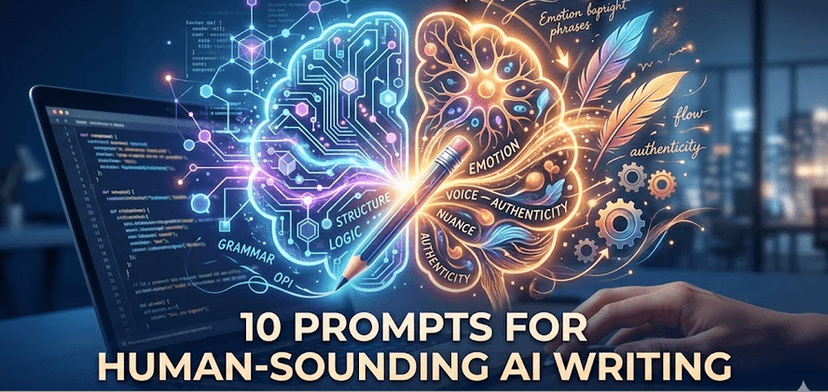
10 Prompts for Human-Sounding AI Writing (And How to Automate It)
AI writing often feels stiff and soul-less. Discover 10 powerful prompts to inject personality into your drafts and see how GenZWrite makes it even easier to bypass detectors.

GenZWrite
GenZWrite official

AI vs. Human Writing Quality: What Students Need to Know
Students rely on AI more than ever. Here’s how AI writing compares to human writing — and what schools actually care about.
GenZWrite
GenZWrite official

Why AI Writing Gets Flagged Even When It’s Human and How to Fix It
AI detectors often flag human writing due to patterns, not truth. This guide shows essay writers how to fix structure, improve flow, and use AI humanizers effectively.
GenZWrite
GenZWrite official
Humanize & Detect AI
Transform robotic AI text into natural, engaging content that passes detection and ranks higher.